
Back then
Stable and predictable
Office decisions rested on clear assumptions. Team sizes stayed stable for years and space needs barely moved. Long leases counted as a safe basis.

An honest decision guide for companies that need to stay flexible today.
.webp)
.webp)
.webp)
.webp)
.webp)

.webp)
.webp)
.webp)



Searching for an office used to be fairly simple. Today companies have to decide even though ways of working, team sizes and space requirements change far more quickly.
Office decisions rested on clear assumptions. Team sizes stayed stable for years and space needs barely moved. Long leases counted as a safe basis.
Office decisions now rest on assumptions. Team sizes shift faster and space needs fluctuate more. Long leases meet a moving reality.
Many office decisions rest on assumptions that look logical at first glance. In practice those very assumptions often lead to expensive mistakes.
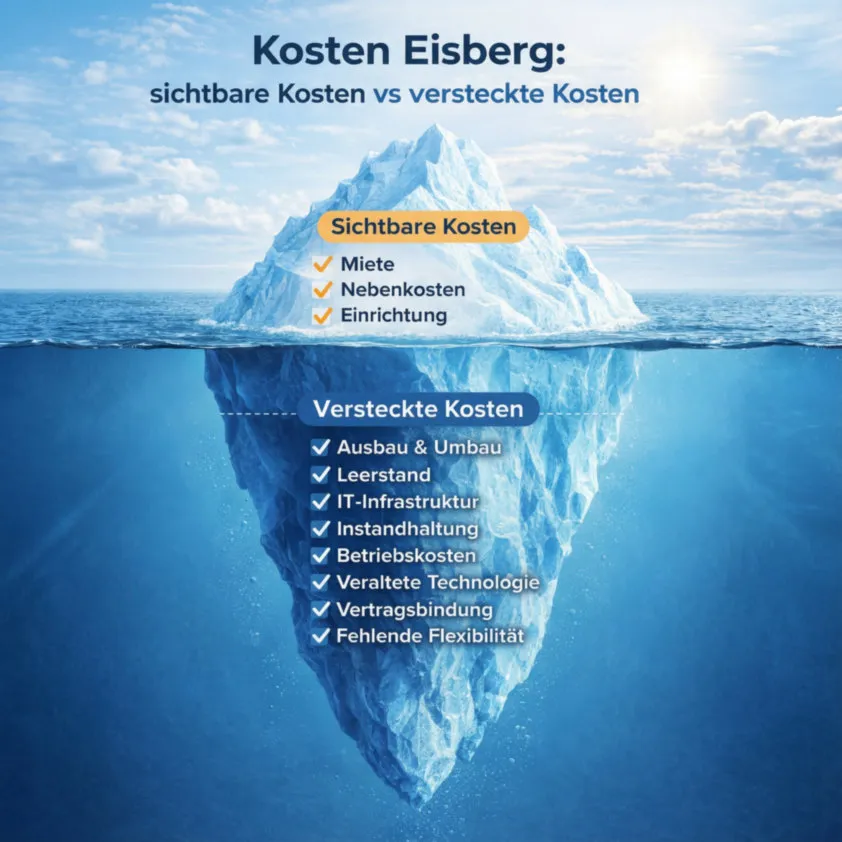
Many companies compare the price per square metre alone. Fit-out, service charges, vacancy and maintenance are often left out. In practice the classic office is frequently the more expensive option, just delayed in time.
Read the full cost case study →
Flex office is often equated with open-plan floors without identity. The reality differs: operators now deliver concepts that individual companies could barely fund on their own.
Book a free call →
Growing companies overestimate their certainty and move into their own space too early. The result is an office that stops fitting quickly. Not because of poor planning, but because growth is rarely predictable.
Book a free call →A classic office is not wrong, but it is not always the right call.
.webp)
When the office is part of how the company presents itself and is used deliberately for positioning, for example at an architecture practice.
When there are special technical requirements, such as water connections or particular structural conditions.
When the space requirement is exceptionally large and cannot sensibly be covered by flex office concepts.
When the use case is one that flex providers cannot cover conceptually or technically, such as a gaming studio.
Most problems arise before move-in, not during it.

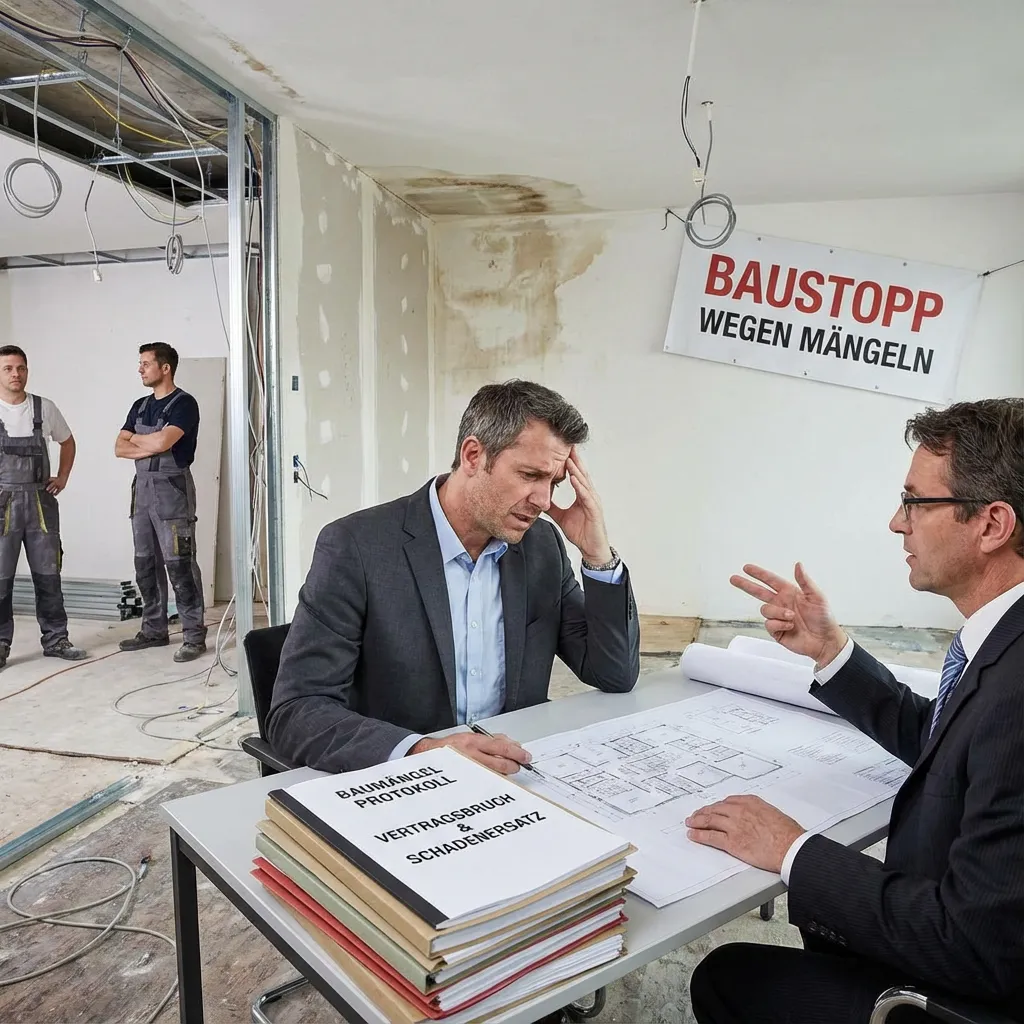
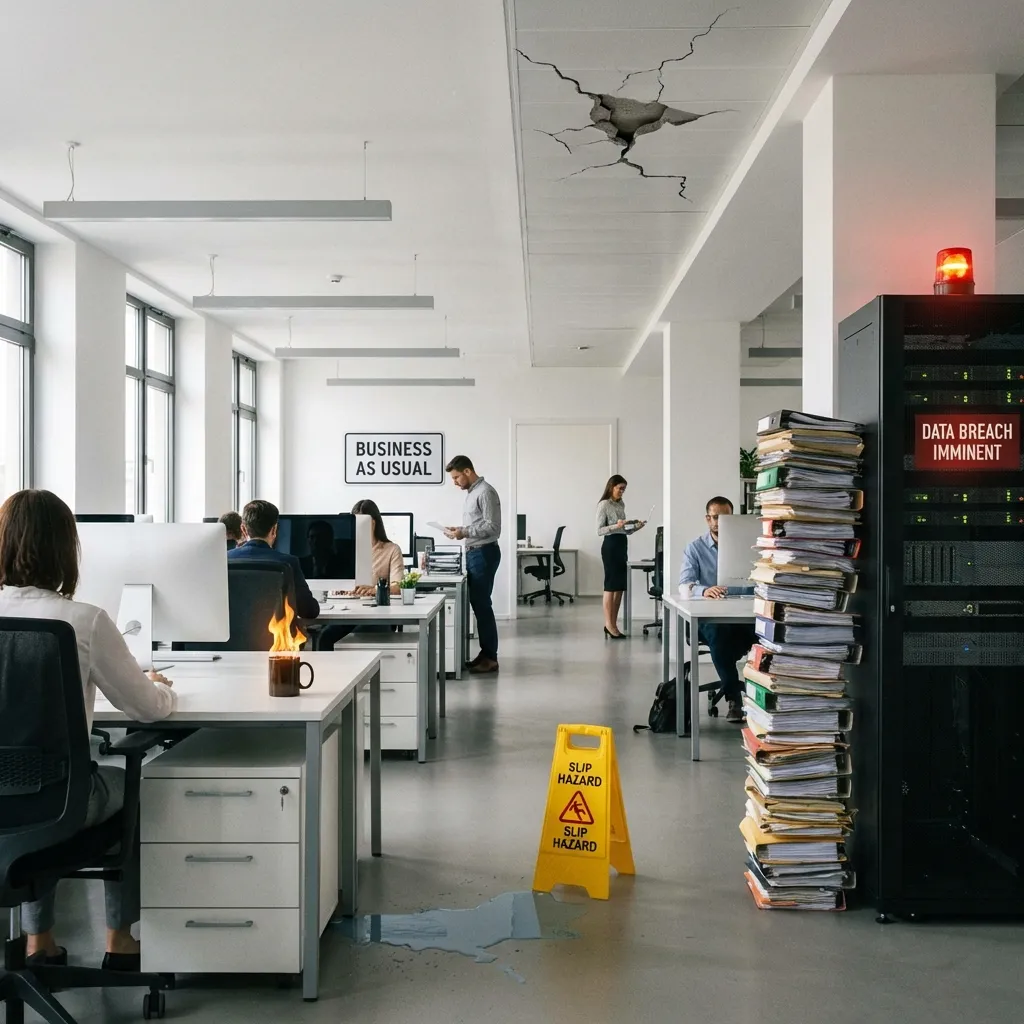
Flex office is not a question of trend or comfort. It is a solution for companies whose space needs change or cannot be planned with certainty.
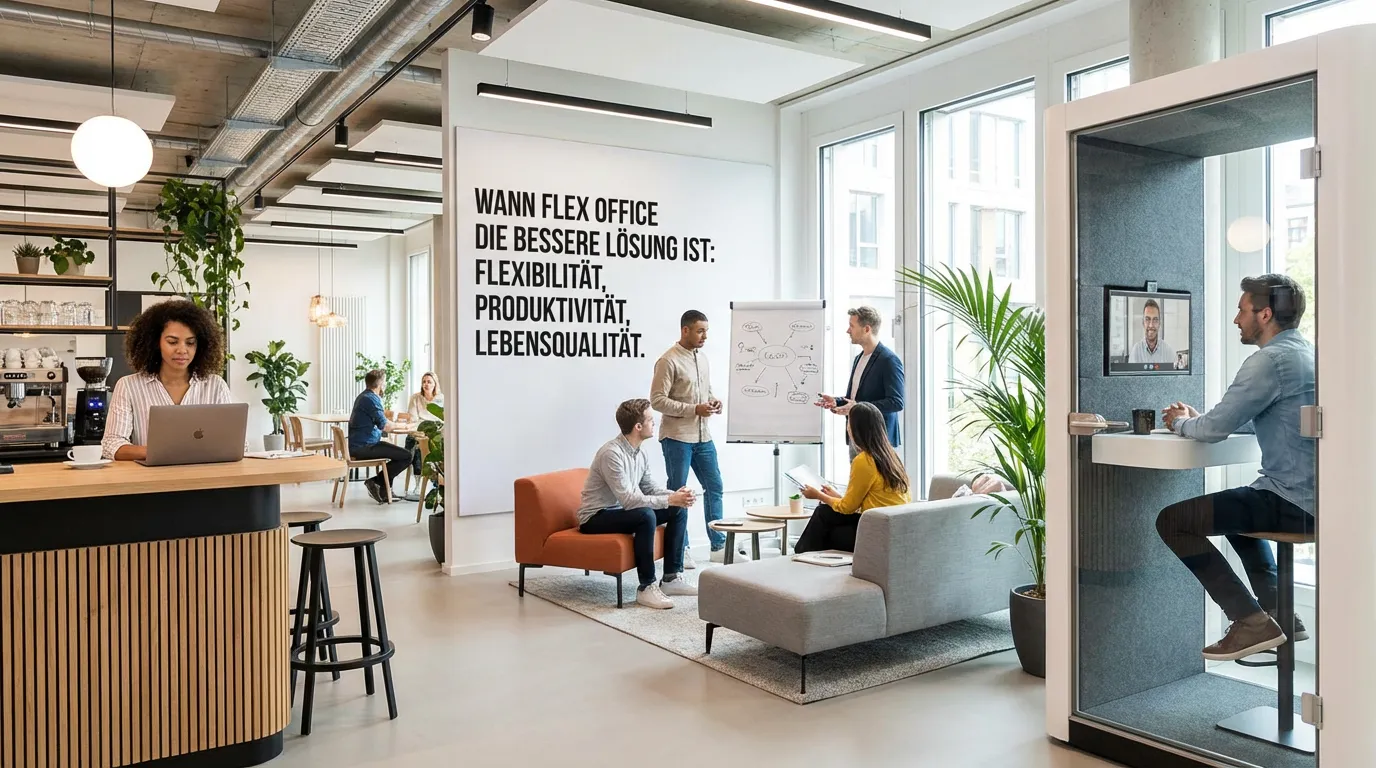
When companies need to act and cannot spend months on searching, fit-out, technology and coordination.
When decisions have to be made even though future team size, use and demand are not clearly defined yet.
When typical fit-out mistakes in acoustics, technology or layout should be avoided because the concepts are already proven.
When investment, running costs and services should be predictable, without hidden extras or unexpected retrofits.
When companies want to focus on their core business instead of losing time and energy on operations and organisation.
When space is used differently than before, for example through hybrid work, project work or changing team structures.
Most bad decisions come from emotions, not from numbers.
The wish for an office of your own often comes from identity and pride, not from a real functional need.
Ownership feels safe, yet it ties up capital, time and flexibility over much longer periods.
Design freedom looks attractive, but the effort, cost and complexity behind it are underestimated.
Control feels reassuring, but in practice it means responsibility for operations, technology and organisation.
Not just because of knowledge, but because of repetition.
.webp)
Experience builds when similar decisions are made again and again and clear patterns emerge between success and failure.
.webp)
Experience shows in spotting the differences between locations, operators and concepts, because you have had to compare them repeatedly.
.webp)
Experience means spotting typical risks early, because you have seen how well-meant decisions fail in practice.
Not every company needs advice. But no company is in the office market every day.
When it is not yet clear how much space is really needed and assumptions shape the decision more than facts.
When different models are compared without putting costs, risks and terms on the same basis.
When decisions have to be made quickly and internal coordination would slow the process down needlessly.
When long-term commitments are on the table whose consequences only become fully visible years later.
When costs should not just be compared but assessed realistically across term, operation and adjustments.
When you want to avoid the typical market mistakes that many companies only notice after moving in.
Homepage Seacrh work by adding this and script added on the page head