.webp)

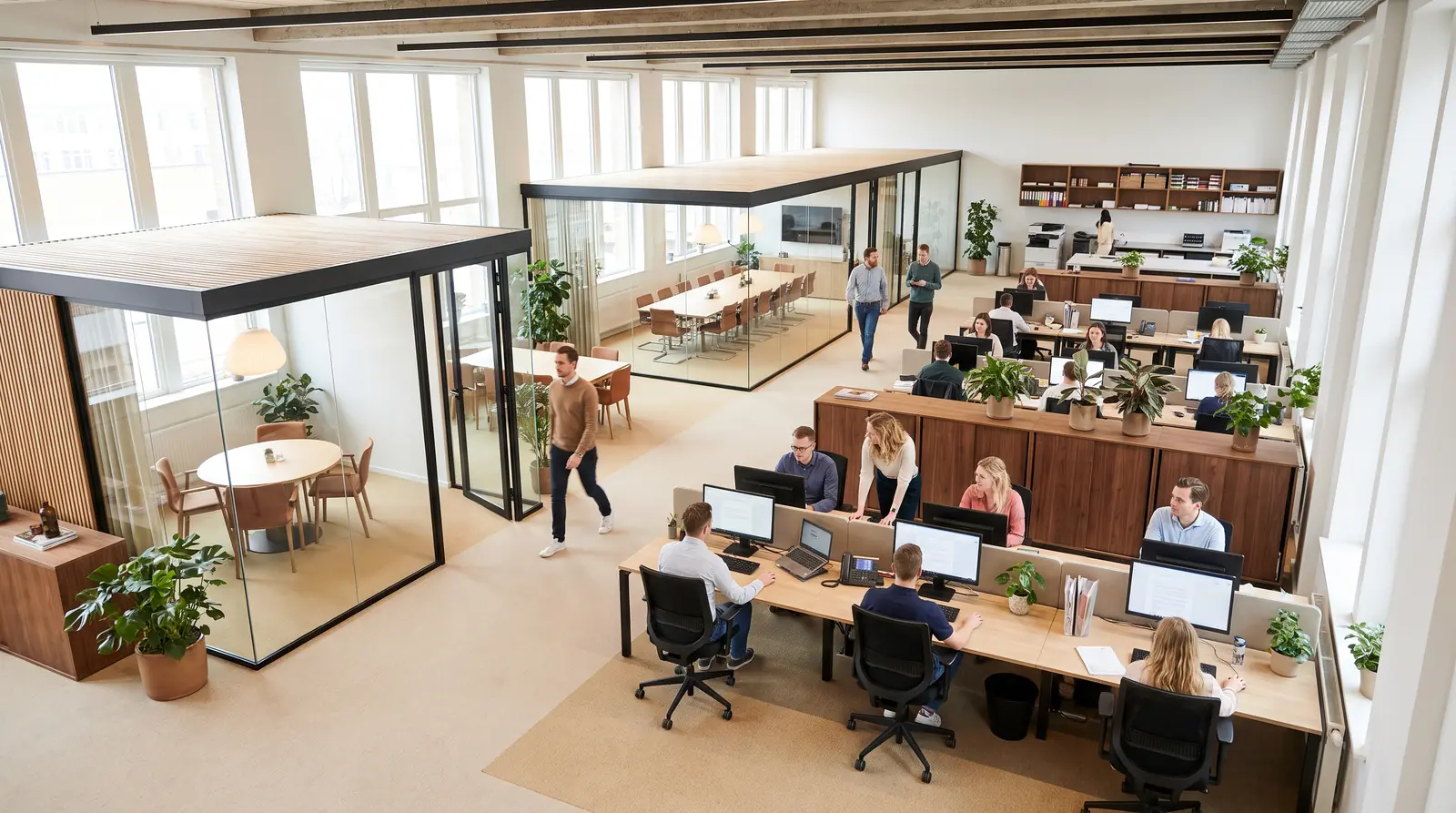
Whoever asks how to find a flex office rarely means just an address with desks. Usually it is about speed, predictability, and the question of which solution really works for their own team, without losing weeks in portals, brochures, and unclear contract details. The short answer: you find the right flex office not through the longest provider list, but through a clear requirements profile, a clean pre-selection, and a structured comparison of need, space type, location, price, contract, and negotiation. That is exactly where a fast rental separates from an expensive wrong decision.
A flex office sounds simple at first glance: furnished, available at short notice, services included. In practice the market is far more heterogeneous. Between coworking space, private office, serviced office, and business center there are differences in pricing logic, lease term, branding, data protection, availability, and expansion options. Whoever decides only by the cheapest price or the nicest lounge often pays more elsewhere later.
How do I find a flex office that really fits?
The right search does not start with a list of providers, but with a solid requirements profile. Companies that skip this end up comparing spaces that do not fulfill the same function at all. So the better question is not only what is available, but what this space has to deliver for your company over the next 6 to 18 months. The following seven steps lead in a structured way to the fitting solution.
| Step | Core question |
|---|---|
| 1. Need | Which usage model does the team really need? |
| 2. Space type | Coworking, private office, serviced office, or business center? |
| 3. Location | Accessibility, external image, everyday suitability |
| 4. Price | What is the real monthly cost including services? |
| 5. Contract | Term, notice, expansion, liability |
| 6. Viewing & timing | Does the space work in operation, does the schedule fit? |
| 7. Negotiation | Where is there room on price and terms? |
Step 1: Define the need cleanly
The first decision is not about the building, but about the usage model. A team of five with two office days a week needs something different than a sales team working on site daily, or a project team that should grow from eight to twenty people in three months. What matters above all is team size, desired start dates, work rhythm, and confidentiality requirements.
On top come questions that are often asked too late in daily life: do you need fixed workstations or is flexible use enough? Should client meeting traffic be possible? Is a presentable reception important? Do phone booths, meeting rooms, or 24/7 access have to be reliably available? The clearer these points are up front, the shorter the shortlist becomes. Whoever searches vaguely gets a lot of choice but little orientation. How to structure the need for a growing team is shown in our guide Office solution for growing teams.
Step 2: Choose the right space type
Not every flex office is automatically a classic private office. Especially for companies in Germany a precise distinction pays off, because it has direct effects on cost and usability. Which base models exist is classified in our overview of office concepts.
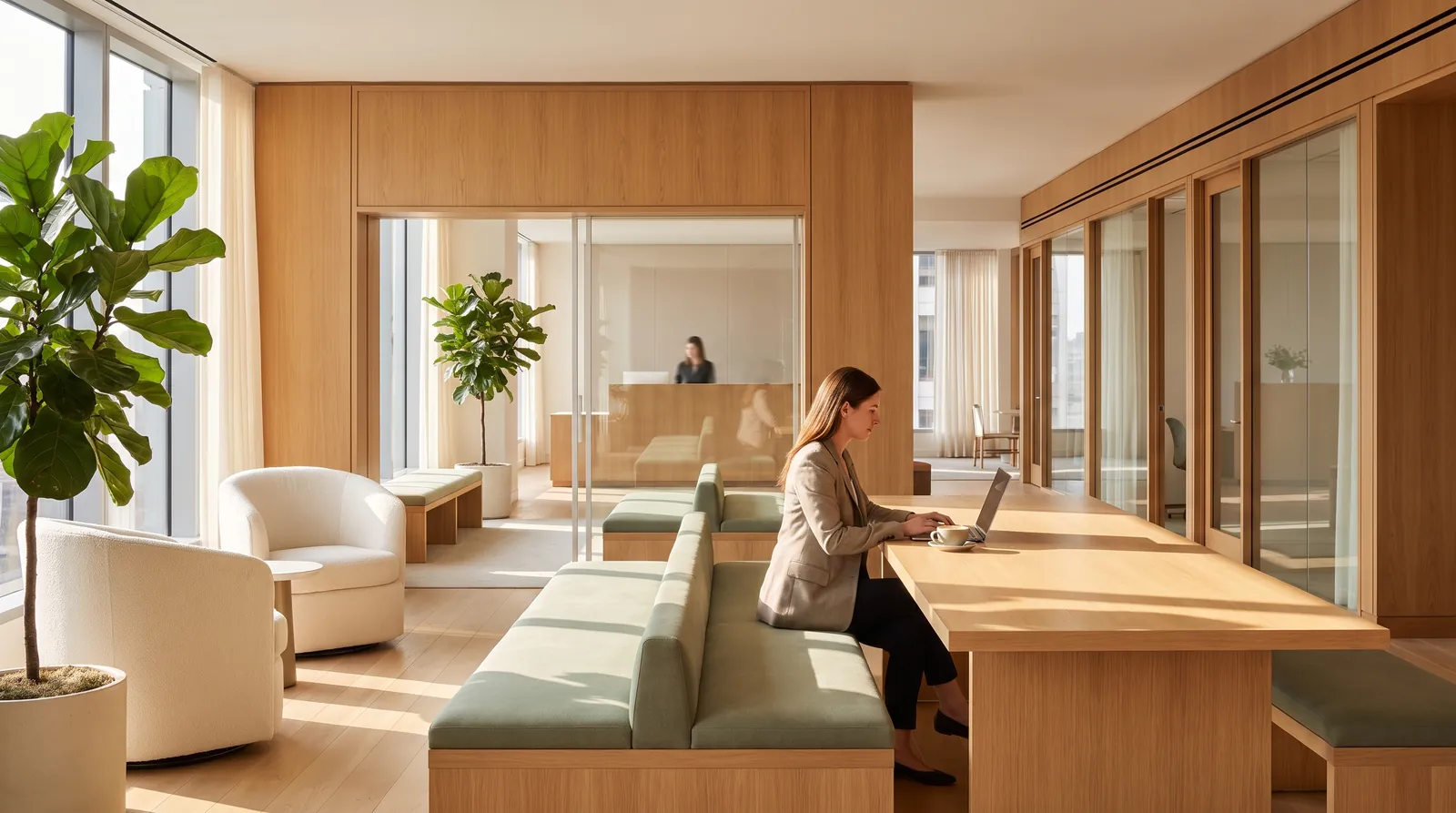
Coworking spaces are often ideal for small teams, individuals, or very early growth phases. They are quickly available and low-threshold, but hit limits faster on discretion, brand presence, or exclusive use. Private offices within a coworking or flex office provider often fit better for teams that need quiet, lockability, and a clear setup without entering a long-term lease. Serviced offices often go a step further and offer more individualized space, more professional reception structures, and more corporate suitability. Business centers can be especially sensible when central locations, classic office infrastructure, and reliable processes matter. The downside: not every solution is as flexible on price as it looks at first glance.
Step 3: Location beats square meters
Many searches start with the space size. But for actual acceptance in the team, location is usually more decisive. A slightly smaller office in the right location is used better than a larger space with poor connections. Pay attention to three levels: first, accessibility for employees, that is public transport, commute times, bike, parking. Second, external image, that is whether the surroundings fit clients, applicants, and partners. Third, everyday operational suitability, that is food options, hotels, fitness, local amenities, and spontaneous meeting spots.
Especially with hybrid models this is relevant. When the office is not well accessible or feels impractical, the on-site rate drops quickly. Then you pay for space that creates no real internal value. An impression of the offer per city is given by our location hubs, for example for Hamburg, Munich, or Berlin.
Step 4: Compare prices correctly
A common mistake when searching for a flex office is comparing by the pure workstation price. That sounds understandable but often misleads. Some offers look cheap because meeting rooms, printing allowances, extra access, cleaning, or reception services are billed separately. Others appear more expensive but are clearly more calculable in the total bill. So always ask for the real monthly cost: furnishing, internet, service charges, access outside core hours, meeting-room use, extra workstations, and possible price jumps after an introductory phase. Deposit, minimum term, and notice periods also belong on the table before you view.
Growing teams in particular should also check how costs change on upsizing or downsizing. Flexibility is only an advantage when it stays contractually and economically transparent. How the real costs add up is shown in our analysis What an office really costs in 2026.
Step 5: Watch the contract details
Flex office does not automatically mean flexible on every point. Some contracts are short but expensive to cancel. Others are cheap but tie you through minimum commitments, service packages, or limited exit options. Especially important are term, renewal mechanics, notice periods, liability questions, and rules on space expansion. When you rent ten seats today but need fifteen in six months, it should be clear whether and on what terms an expansion is possible. Equally relevant: what happens when your need drops?
With international or larger companies, topics like data protection, IT security, visitor processes, compliance, and invoicing logic often come on top. These points feel dry but become decisive at the latest during the internal approval process. How this looks in the corporate context is shown in our article Flexible office for corporate teams.
Step 6: View and plan timing realistically
The space has to work in operation, not only in photos. So a viewing should be shaped less by design questions and more by usage questions. How is the acoustics? How full do shared areas feel at typical peak times? Are there enough real focus spaces? Is the Wi-Fi stable? How professionally is the reception organized? Whoever receives clients or holds sensitive conversations should check meeting rooms, discretion level, and access controls closely. Air conditioning and lighting are also often underestimated. An office that looks modern on the first viewing can quickly become impractical in summer or on busy days. It makes sense to look at viewings not in isolation, but in direct comparison.
Many companies also only search actively once the pressure is already high. Then a strategic decision becomes a rush solution. Especially in sought-after locations like Berlin, Munich, Hamburg, or Frankfurt, well-fitting units for certain team sizes are not permanently available. So plan backward from the desired move-in date and build in enough time for selection, internal coordination, viewings, contract review, and negotiation. Even in the flex segment not everything happens overnight, at least not without compromises.
Step 7: Do not only search, but negotiate
Many tenants accept the first offer because flex office is perceived as a standardized product. That is a mistake. In this market too there is room, on price, on free months, on meeting-room allowances, on branding, on fit-out wishes, or on contract options. How large this room is depends on location, occupancy, provider structure, and team size. A smaller office in a fully occupied top location negotiates differently than a larger unit under short-notice letting pressure. So it comes down to market knowledge and timing.
This is exactly where the advantage of an independent, commission-free tenant perspective shows. Whoever knows the market compares not only offers, but also negotiating positions. A provider need not be bad just because it is more expensive, when terms, expansion options, and operational quality are clearly better in return.
“Finding a flex office is not a question of quantity, but of pre-selection. In over nine years in the market, the best rental was almost never the one with the most viewings, but the one with the sharpest requirements profile and the best negotiation.”
Fabrizio Lauria, Founder of CoWorking Capital
How do I find a flex office without endless research?
When there is little internal time, the search should be outsourced in a structured way or at least guided. The bottleneck is rarely the pure market volume, but the ability to quickly separate relevant options from decorative ones. An efficient process usually looks like this: sharpen requirements, pre-qualify the market, compare fitting offers, view selectively, negotiate terms, finalize the contract. That is exactly the difference between a search that drags on for weeks and a rental that can be decided robustly in a short time.
For many companies it is more economical to condense the process with a specialist than to invest internal hours in research and individual coordination. A provider like CoWorking Capital adds value exactly where market transparency, speed, and better terms count, across Germany, on the tenant side, and without extra broker costs for searching companies. In the end the nicest space should not win, but the most fitting one. So before committing, ask soberly once more: does this office support our work model? Is the contract still sensible when the team grows or shrinks? Does the cost structure fit our planning? Would employees and clients really accept this location? Whoever answers these questions clearly with yes has not just found any flex office, but the right solution.
Want to find a fitting flex office without losing weeks in portals? Get free, commission-free advice now and receive a fitting shortlist including prices within 24 hours.