For anyone who has only ever signed a conventional lease

Flex office, simply explained.

Renting an office usually works like this: take a floor, sign for five years, have it fitted out, buy furniture, order internet. A flex office is a ready to use office instead, normally lockable and yours alone. In three minutes you will know what that means, what is included and where the limits are.

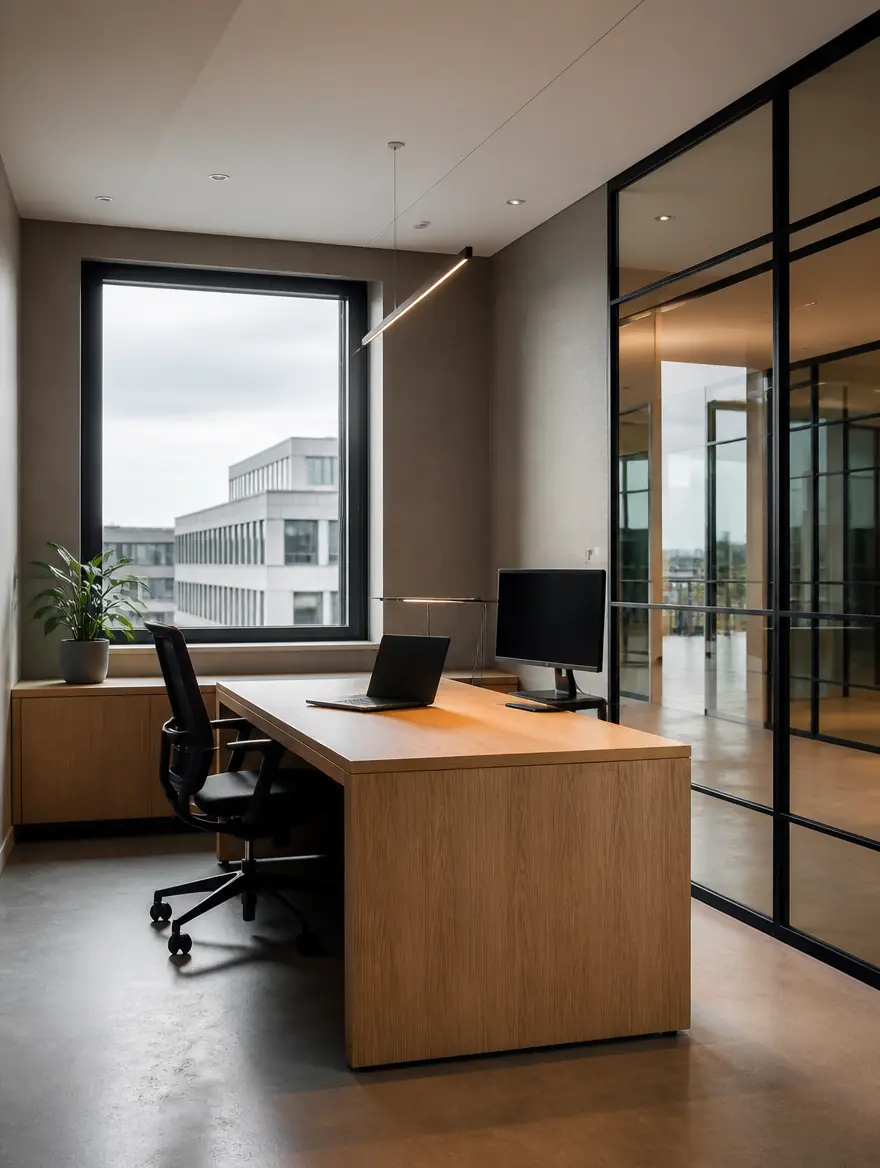
Private office in a modern flex office building with a desk, a glass wall and daylight
Symbolic image, AI-generated
01 / Definition

What a flex office is.

A flex office is a ready to use office space that you pay for by the month. You are not renting bare square metres, you are renting a finished state: furniture, electricity, internet, cleaning, reception and meeting rooms are normally part of it, and the building is run by a provider.

Conventional space

Ten things, ten times you

Many of these services you arrange, commission and pay for separately.
LeaseDepositFit-outFurnitureInternetElectricityCleaningKitchenReceptionMaintenance
Many invoices plus the time that goes into running it
Flex office

The same things, one package

Operation and maintenance sit with the provider. You have one contract and one contact.
SpaceFurnitureInternetElectricityCleaningKitchenReceptionMaintenance
One monthly price usually per workstation
02 / Comparison

Buying or leasing, you already know the principle.

If the picture is familiar from another part of life, the rest barely needs explaining.

Buying a car or leasing one

Bought: Your capital is tied up and you deal with the garage, the tyres and the annual inspection. If the car is off the road, that is your problem and your time.

Leased with a service package: You report the fault in one place, repairs and a replacement car are covered by the agreement. You pay a fixed rate and know what each month will cost.

In office terms: If the air conditioning fails, you do not call three tradespeople, you call the provider. And if your team doubles in two years, moving within the building is often possible, depending on the contract and what is free.

Drawing of two cars: on the left a car surrounded by tools, a tyre, a fuel pump and invoices, on the right a car in motion beneath a shield
Illustration, AI-generated

To be straight about it: in this model you are paying for convenience and flexibility. Per square metre it is rarely the cheapest route. The difference lies in everything you no longer have to do, buy and organise yourself.

03 / Time

From decision to first working day.

The stages that come before move-in. Not a timeline and not to scale, this is about how many things you have to organise yourself.

Conventional spacefive stages before move-in
Search
Lease
Design and fit-out
Furniture and IT
Moving in
Flex officethree stages before move-in
Shortlist
Viewing
Contract
No fit-out and no furniture order. The basic setup is in place, specific IT requirements are clarified beforehand.
Cost comparisonWhat the difference means in moneyThe numbers for 20 workstations in Berlin, both models side by side, including every item that usually gets overlooked. See the cost comparison
04 / Side by side

Conventional space and flex office side by side.

The typical differences in daily use. Every provider negotiates differently in the individual case.

Conventional office spaceFlex office
TermUsually 3 to 10 yearsOften from a few months
Move-inFit-out, furniture and IT mean months of lead timeFurnished and wired, move-in usually within days
EquipmentYou buy it and you maintain itProvided, maintenance sits with the provider
Service chargesAdvance payments plus an annual reconciliationNormally included in the monthly price
When something breaksYou arrange tradespeople and appointmentsYou report it to the provider
More workstationsRent additional space or move outAdd desks or swap offices, subject to availability
Reception and meetingsYou commission and pay for them separatelyPart of the offer, meeting rooms often on an allowance
Pricing logicPer square metre, plus every additional itemUsually per workstation per month
05 / What it looks like

What a flex office normally looks like.

Many people picture a noisy open-plan floor with a foosball table. For companies the normal case looks different.

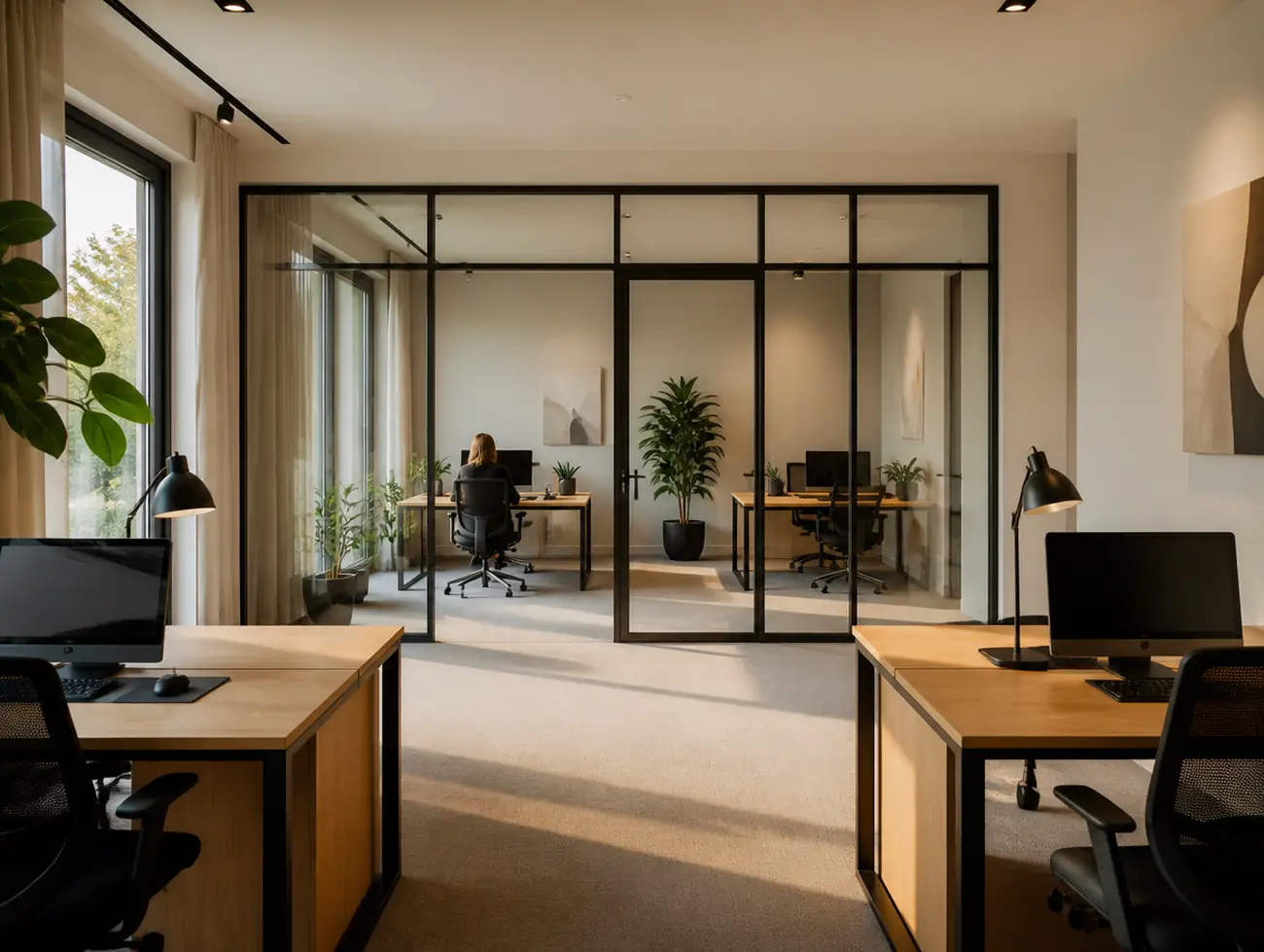
Private team office with four workstations behind a glass wall
Private team office
A lockable room for your team only, in the size that fits you.
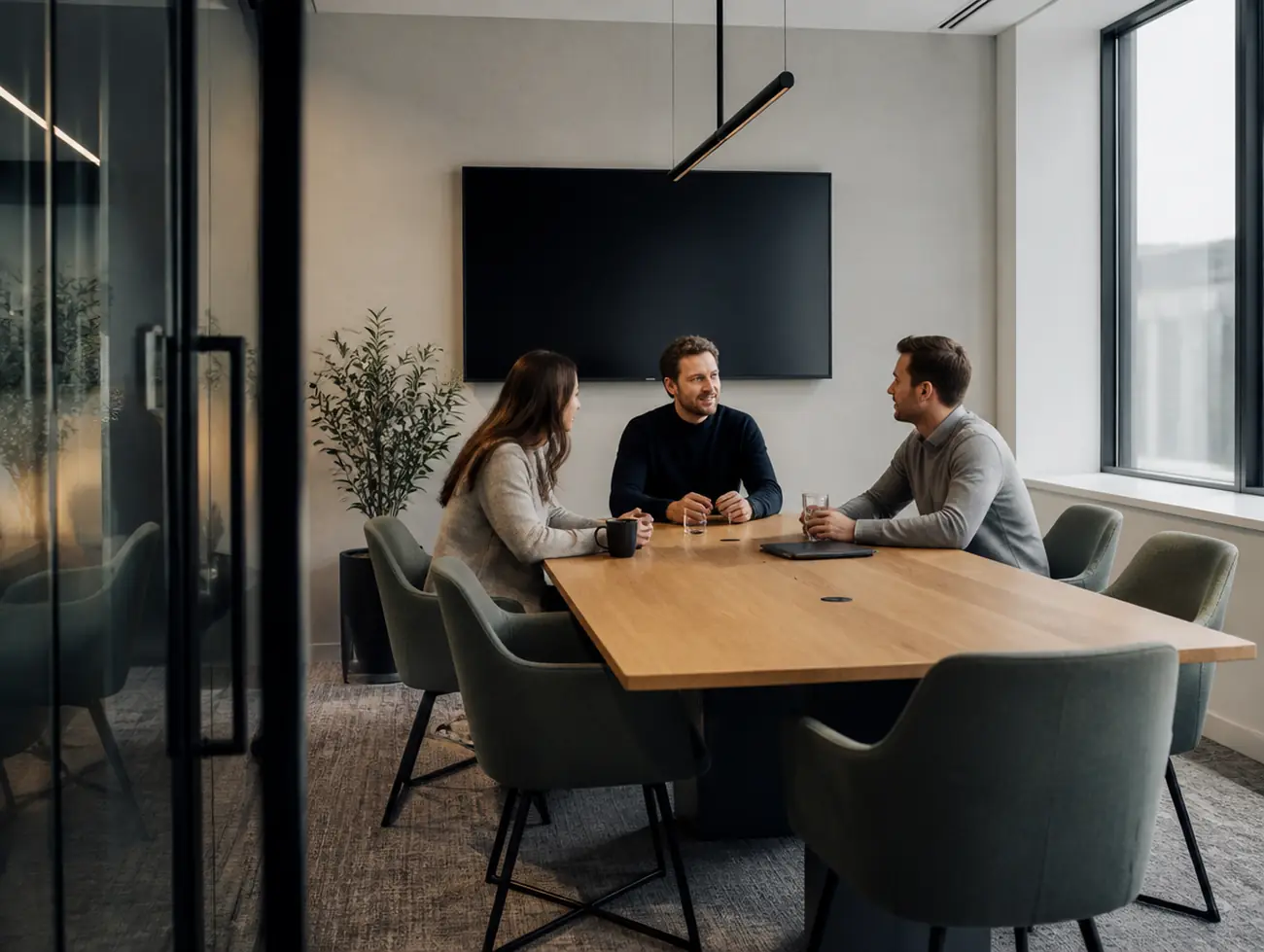
Meeting room with a table, a screen and three people talking
Meeting rooms
Bookable as needed, usually with a monthly allowance in the price.
Reception area and lounge of a modern office building
Reception and lounge
Your guests are received without anyone on your team being tied up for it.
Symbolic images, AI-generated
06 / Concerns

What people worry about first.

The questions that come up in almost every first conversation.

Will I be sitting in an open-plan room among strangers?

Only if you want to. For companies the normal case is a private, lockable office for their own team. The open coworking area is one option among several, not a requirement.

Is it not considerably more expensive?

Per square metre, usually yes. Per workstation the sum often looks different, because fit-out, furniture, electricity, internet, cleaning and unused space are already included. Work out both routes before you decide. You can see how that adds up in the 2026 cost comparison.

Can we receive clients there?

Yes, these buildings are made for it. The address is a normal business address, often in locations you could hardly afford on a conventional lease. Reception, meeting rooms and a company sign at your door are part of the deal in many buildings, and in individual cases it pays to read the list of services.

Can we register our company seat there?

In many buildings yes, and it is set out in the contract with the provider. It is not handled the same way everywhere, so clarify the point before you sign. I always check it as part of an enquiry.

Can we work quietly and confidentially?

In your own office yes, it is a closed room with its own door. How good the acoustic insulation is varies from building to building, so put it on the list for the viewing. For calls outside your office most buildings have phone booths.

What happens if we grow or shrink?

Growing is usually solved inside the same building, through extra desks or a larger office. Shrinking happens at the end of the term. That one point is the real reason most companies switch.

So I am not committed to anything at all?

You are. There is a contract with a fixed term and a notice period, but terms are usually much shorter than on a conventional lease. Flexible means predictable, not non-committal.
07 / Limits

When a conventional lease fits better.

Not every company belongs in a flex office.

If you know for certain that in five years you will be in the same place and roughly the same size, if a lab, storage, a workshop or special technical equipment is part of the picture, or if the space is meant to be fitted out entirely in your own brand, then your own space is the better route. If none of that applies, a flex office is usually the calmer one.

Decision guideConventional lease or flex office?The full weighing up of both models, including the mistakes that happen most often with conventional space. Read the decision guide
08 / Process

How an enquiry works with me.

Three steps, no form loops.

1

You tell me what you need

City, number of workstations, start date and a rough budget. Five minutes on the phone is usually enough.

2

I send you buildings that fit

With prices, terms and photos, usually within a few working days. You compare in your own time.

3

You view them and decide

I come along to the viewings, help negotiate and stay your contact after the contract is signed.

Still have questions? Then let us talk briefly.

Tell me in a few sentences what you are looking for. I will come back with spaces that fit, and I will also tell you if a flex office is the wrong route for you.

10 years in the market No fee for tenants Across Germany

Homepage Seacrh work by adding this and script added on the page head

Eschborn

Walldorf

Öhringen

Würselen

Teningen

Schenefeld

Reinsberg

Rastatt

Pfungstadt

Norderstedt

Neu-Isenburg

Neckartenzlingen

Markgröningen

Maintal

Klipphausen

Kirchheim unter Teck

Hilden

Heiligenhaus

Heidenheim an der Brenz

Hallbergmoos

Göppingen

Geilenkirchen

Friedrichsdorf

Frickenhausen

Fellbach

Buxtehude

Alzenau

Chemnitz

Weiterstadt

Villingen-Schwenningen

Speyer

Simmerath

Schwetzingen

Schmitten

Rüsselsheim

Ratingen

Neustadt an der Weinstraße

Monheim am Rhein

Metzingen

Marburg

Ludwigsburg

Lich

Kronberg

Konstanz

Herford

Gießen

Gera

Friedberg (Hessen)

Düren

Dreieich

Detmold

Baesweiler

Baden-Baden

Kaiserslautern

Gütersloh

Moers

Siegen

Trier

Salzgitter

Jena

Bergisch Gladbach

Koblenz

Remscheid

Recklinghausen

Erlangen

Bottrop

Bremerhaven

Reutlingen

Göttingen

Ulm

Heilbronn

Würzburg

Paderborn

Leverkusen

Ludwigshafen am Rhein

Kassel

Mainz

Halle (Saale)

Freiburg im Breisgau

Mönchengladbach

Münster

Bochum

Nürnberg

Frankfurt am Main

Berlin

Wolfsburg

Fürth

Offenbach am Main

Pforzheim

Ingolstadt

Regensburg

Neuss

Heidelberg

Herne

Solingen

Osnabrück

Darmstadt

Mülheim an der Ruhr

Oldenburg

Hamm